
The Commercial Construction Landscape in 2026
As we move through 2026, the commercial & industrial construction industry is undergoing significant transformation. The continued expansion of digital infrastructure, advanced manufacturing, and industrial automation has driven unprecedented demand for specialized, large-scale facilities. Nowhere is this boom more evident or more challenging than in humidity-prone regions, where construction teams are pushing the boundaries of innovation while contending with some of the nation’s most demanding environmental conditions.
The US has become a preferred location for major development projects due to favorable economic conditions, strategic positioning for distribution, and abundant energy resources. However, the region’s notorious humidity continues to present unique challenges that require specialized solutions, particularly for critical infrastructure projects.
High-Stakes Construction: When Failure Isn’t an Option
The stakes have never been higher for construction teams working on today’s advanced facilities. Consider the complexity of projects currently underway across the US:
Data Centers: The Backbone of Our Digital Economy
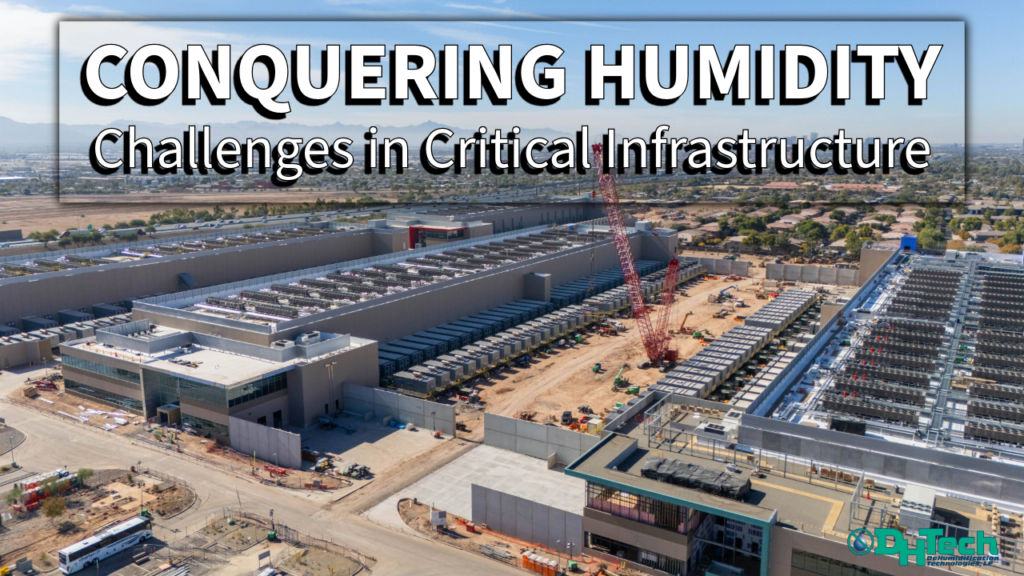
With cloud computing demands continuing to grow exponentially through 2026, data center construction remains one of the hottest sectors in commercial building. These facilities, often exceeding 500,000 square feet, house millions of dollars in sensitive electronic equipment that must be protected from the moment it arrives on site.
The staging process for server installations has become particularly critical, as these components must transition from delivery to final placement in strictly controlled environments. Even minor exposure to elevated humidity levels can compromise equipment integrity, leading to premature failure and astronomical replacement costs.
Semiconductor Facilities: Precision at the Microscopic Level
The CHIPS Act investments of the early 2020s have fueled a resurgence of semiconductor manufacturing in the United States, with several major facilities now operating in Texas and Louisiana. These buildings represent perhaps the most humidity-sensitive construction projects imaginable, with fabrication processes requiring environmental control measured in parts per million.
Construction teams building these facilities must maintain cleanroom-like conditions well before the actual cleanroom equipment is installed, as even the basic building materials—from concrete slabs to interior walls—must cure and stabilize under precise humidity conditions to prevent future contamination issues.
Large Industrial Complexes: Scale Compounds Challenges
The industrial sector continues to expand across America, with manufacturing facilities, processing plants, and distribution centers growing in both size and complexity. These massive structures, often constructed with tight timelines and thinner margins, face compounded humidity challenges due to their sheer scale.
When working with hundreds of thousands of square feet of space, even small humidity control failures can cascade into major issues affecting everything from flooring adhesives to roof membrane installations.
2026’s Climate Reality: Unpredictability as the New Normal
This year has demonstrated yet again how climate patterns continue to become more erratic and extreme. This year already has multiple drastic temperature shifts swinging from unusually cold periods to intense heat waves, then back to unseasonable cold snaps. Interspersed between these temperature fluctuations, heavy rainfall events have created additional moisture management nightmares for construction teams.
These conditions have made traditional construction scheduling increasingly unreliable. Project managers can no longer count on predictable seasonal patterns for sensitive installation phases. The “humidity window” for critical work has become a moving target that requires active management rather than passive planning.
The Critical Role of Environmental Control in Modern Construction
For facilities with mission-critical functions where downtime costs can run into millions of dollars per hour, environmental control during construction has evolved from a best practice to an absolute requirement. Industry standards now recognize that protecting the building envelope from humidity damage during construction directly impacts operational reliability for years to come.
The most significant advances have come in temporary environmental control systems that can maintain precise conditions regardless of exterior weather. These systems have become sophisticated enough to create micro-environments within construction sites, allowing teams to sequence work more efficiently by creating ideal conditions in specific areas while construction continues elsewhere.
Partnering with Expertise: The DH Tech Advantage
With the unpredictable nature of today’s weather patterns, having a trusted partner in industrial dehumidification has become essential for successful project execution in humidity-challenged environments. Dehumidification Technologies (DH Tech) continues to set the standard in this specialized field, leveraging over three decades of construction industry experience to deliver reliable solutions for the most demanding projects.
What distinguishes DH Tech in 2026’s construction landscape is their comprehensive understanding of how environmental control integrates with modern construction processes. Their engineering teams now work alongside project planners from the earliest design phases, identifying critical moisture control requirements for each stage of construction and designing temporary environmental systems that evolve with the project.
Their specialized focus on high-performance buildings has made them particularly valuable partners for data center, semiconductor, and large industrial projects. Their equipment fleet includes specialized solutions designed specifically for critical equipment staging areas, cleanroom preparation, and large-volume industrial spaces.
With locations around the world and an extensive presence across the United States, DH Tech provides both the equipment capacity and technical expertise needed for today’s largest construction projects. Their regional response capabilities ensure that additional equipment can be deployed quickly when weather conditions change unexpectedly—a frequent occurrence along the Gulf Coast.
The Economics of Prevention
Perhaps the most compelling aspect of proper humidity control in 2026’s construction environment is the return on investment. Analysis of recent major projects shows that comprehensive dehumidification strategies typically add less than 1% to overall construction costs while potentially preventing delays and rework that could otherwise impact 15-20% of the project budget.
For sensitive facilities like data centers and semiconductor plants, these economics become even more favorable when considering the protection of staged equipment and finished installations. A single moisture-related failure in critical infrastructure can exceed the entire cost of a comprehensive dehumidification program.
Looking Forward: Construction Resilience in a Volatile Climate
As we look toward the remainder of 2026 and beyond, it’s clear that construction methodologies will continue to adapt to our changing climate realities. The US, with its combination of high humidity, unpredictable weather patterns, and critical infrastructure development, serves as a proving ground for innovations that will eventually become standard practice nationwide.
The most successful construction teams will be those who embrace comprehensive environmental and humidity control as a core component of project planning rather than a reactive measure. By partnering with specialized experts like DH Tech, builders can ensure that even the most challenging humidity conditions won’t compromise schedule, quality, or long-term building performance.
In an industry where time is money and is schedule driven, controlling the construction environment has become as important as the construction itself.
Reach Out to DH Tech, leaders in Industrial Dehumidification Rentals today to plan your industrial and commercial building construction projects.
About Dehumidification Technologies:
DeHumidification Technologies is the proven industry leader in providing temperature and humidity control solutions.
We offer services in multiple industries to ensure your project goals are met within budget. Our range of services include #industrial, water damage, construction, refurbished equipment, design specifications and manufacturing services.
With 13 locations globally, DH Tech has international availability and 24 hour emergency response to better serve and meet your project needs.
Contact Us at : dhtech@rentdh.com